
Empowering Christians Through Faith-Based Inspiration.

Blog

  • Overcome Anxiety: Finding Spiritual Rest in God’s Unending Provision.

    Are you exhausted by the silent battle of anxiety? Many of us walk through life carrying invisible weights—fear of failure, fear of tomorrow, and the relentless pressure of not being enough. While anxiety is not God’s plan for your life, the struggle often lies in where we search for stability and satisfaction.

    We are constantly driven by perpetual needs and desires that are never exhausted. True peace begins when we stop striving in our own strength and surrender to the God who delights in providing.

    This is your moment to break free from anxious living and discover the wisdom that conquers anxiety.

    The Folly of Self-Reliance: Why Striving Leads to Spiritual Drought.

    The human heart was created to depend on its Maker. However, when we attempt to meet our needs outside of God, we embark on a journey marked by frustration, emptiness, and spiritual dryness.

    Scripture describes this self-driven pursuit as abandoning the fountain of living water and digging broken cisterns that cannot hold anything. We believe our strength, effort, or brilliant human wisdom can produce lasting fulfillment, but without the blessing of the LORD, our labor is empty.

    The Anxiety of the Treadmill.

    • Human Limits: Trusting solely in human ability (our own or others) brings inevitable disappointment because human help is imperfect and limited.
    • Futility and Weariness: When people strive in their own strength, their labor becomes toil, their gains slip away, and their efforts end in weariness. Pursuing needs without God is like running on a treadmill—expending energy but ultimately going nowhere.
    • The Idolatry Trap: When needs become a priority above God, they transform into idols, replacing God on the throne of the soul. This desperate pursuit of security through wealth, relationships, or personal ability creates a false shelter that cannot withstand the storms of life.
    • Fear and Compromise: Anxiety intensifies this problem, often pushing people into shortcuts, compromises, and decisions that wound the soul, just as Saul’s fear drove him into disobedience. Whenever fear leads, faith and wisdom are silenced, and obedience is ignored.

    The Divine Correction: Blessed is the person whose self-made plans, which exclude God, are lovingly frustrated by the LORD to redirect them. God refuses to bless strategies that originate from unbelief. You cannot idolize your needs and still access the peace and freedom that God offers. Only in submitting your needs to God do you find clarity and peace, because apart from Him, we can do nothing.

    2. The God Who Provides: Anchoring Your Heart in Divine Sufficiency.

    The key to conquering anxiety is shifting your focus from limited human effort to the boundless, unlimited, and all-sufficient nature of God. The Scriptures present God as Jehovah Jireh—the LORD who provides. He is the Source from whom every good and perfect gift flows.

    Intimate and Deliberate Provision.

    God’s provision is intensely personal. Jesus assures us that the Father sees our needs long before we voice them, demonstrating a care that is both deliberate and intimate. He feeds the birds of the air and clothes the lilies of the field, showcasing a love far greater toward His children.

    1. Daily Dependence: God provides daily, not all at once, precisely so that we learn to walk with Him moment by moment. Just as He gave manna each morning in the wilderness, He continues to meet our needs according to the day’s demand. This practice frees you from the cares and fear of tomorrow.
    2. Perfect Timing: God’s timing is always perfect—it is rarely early by our standards, but according to His wisdom, it is never late. Faith trusts this timing, even when the vision seems to tarry.
    3. Creative Supply: No circumstance can limit God’s ability to deliver. He supplies in ways that surprise us, having fed Elijah through ravens and multiplied a widow’s oil.
    4. Overflowing Generosity: God’s generosity surpasses human imagination; He does abundantly beyond what we ask or think. His supply is overflowing—”pressed down, shaken together, and running over”.

    The Kingdom Order of Provision.

    God provides according to a specific kingdom order: when His reign is first in our hearts, all other things fall into place. Our provision is anchored not in our merit but in His unchanging faithfulness. Paul boldly declares that God will supply all our needs according to His riches in glory.

    When you recognize that God is your Shepherd, you can confidently declare, “I shall not want”. Trusting in His character and sufficiency leads to a heart satisfied in Him.

    Take the Step: Exchange Striving for Spiritual Rest.

    If you are struggling with perpetual anxiety driven by fear of lack or striving for security, it’s time to choose daily trust.

    Spiritual rest is not the absence of responsibility—it is the presence of God. Stop striving to meet your needs and desires in your own limited power—stop relying on broken cisterns and return to the inexhaustible Source. By submitting your needs and desires to God in exchange for His peace, you allow Him to take over the throne of your soul. Your decision to trust the LORD allows the peace of God to rule your heart.   Therefore, let the peace of God—the peace that surpasses all understanding—fill your heart, calm your mind, and guide your steps. Trust the Shepherd; He remains faithful.

    Inspiring Scriptural Wisdoms for Conquering Anxiety and Finding Peace.

    What is Godly Fear and Ungodly Fear: Understanding the Two Types of Fear in the Bible.

    Escaping the Trap of Insatiable Need and Finding Your True Rest in Contentment.

    Understanding the Meaning of Fear through the Bible and Its Spiritual Origin.
  • Inspiring Scriptural Wisdoms for Conquering Anxiety and Finding Peace.

    Anxiety is often described as one of the most silent battles of our generation. It hides behind our smiles and responsibilities, leaving many carrying invisible weights like the fear of the unknown, failure, or not being enough. Even believers who love God deeply sometimes feel overwhelmed or shaken. However, anxiety is not God’s plan for your life. God has already made provision for your peace, stability, and inner rest through powerful wisdom rooted in Scripture.

    To break free from anxious living, we must first understand two spiritual realities: the relentless nature of human need and the complete futility of worry.

    1. The Relentless Cycle of Human Need

    Human beings are born into a world of perpetual needs and possess inherent perpetual desires. Human needs and cravings are never exhausted. When one longing is met, another immediately rises to take its place.

    This appetite is naturally insatiable. The eye never stops wanting to see more, and the heart continually hungers for something else (Ecclesiastes 1:8; 6:7; Proverbs 27:20). No earthly gain—whether wealth, pleasure, or achievement—can bring lasting fulfillment. In fact, the more we acquire, the more our desires expand, and needs grow as possessions grow, creating a relentless cycle of pursuit (Haggai 1:6; Ecclesiastes 5:11).

    This endless multiplication of desire behaves like a bottomless pit—always consuming, never satisfied. Constant labor cannot quiet the inner hunger that only God can fill (Ecclesiastes 6:7).

    The Trap of Striving Without Rest

    When desire is not governed by faith, it quickly becomes bondage. The craving for more can enslave the heart, leading to harmful decisions and restless living (1 Timothy 6:9; Proverbs 15:27).

    Anxiety-driven striving wears the body down and exhausts the soul. Scripture warns that working endlessly out of fear or insecurity produces only weariness, for true rest is found not in accumulation but in trusting God (Psalms 127:2; Matthew 11:28).

    Both the poor (who fear not having enough) and the rich (who fear losing what they possess) experience fear connected to material need, proving that neither poverty nor wealth can give lasting peace. Only when God becomes the desire of the heart does true satisfaction emerge. Christ, the Bread of Life, is the only one who satisfies the soul’s deepest hunger (John 6:35).

    Ultimately, human need is designed to lead us to humility and dependence on God. True satisfaction begins when the soul returns to its rightful resting place—God Himself (Psalms 62:1).

    2. The Failure and Futility of Worry

    While human needs are real and legitimate, anxiety about them is a learned behavior rooted in unbelief. Worry is perhaps the most unproductive activity anyone can engage in. Jesus makes it clear that anxiety cannot add a single moment to life nor contribute anything meaningful to solving our needs (Matthew 6:27; Luke 12:25–26).

    Instead of helping, worry yields only destruction:

    • It Drains and Weakens the Soul: Worry drains the soul, weakens the heart, and clouds the mind with fear (Proverbs 12:25). It magnifies challenges, stretches concerns beyond reality, and paints the future with exaggerated threats.
    • It Blinds Us to God’s Faithfulness: A tragedy of worry is that it blinds us to God’s consistent faithfulness. When fear takes over, we forget past testimonies and previous deliverances, reducing our faith and trust in God.
    • Worry and Faith Cannot Coexist: Faith/trust and worry/anxiety cannot simultaneously be in the same heart; where one dominates, the other weakens (James 1:6–8). Anxiety springs directly from fear and unbelief—a conscious or unconscious refusal to trust God’s fatherly care (Matthew 6:30).
    • It Steals Today’s Strength: Worry fixates on the unknown future, stealing the strength God intended for today (Matthew 6:34). This often results in rushed decisions, compromises, and actions outside God’s timing, leading to regret.
    • It Destroys the Body and Blocks Peace: Worry destroys the body physiologically and psychologically, weakening the bones, draining emotional strength, and pressing heavily upon the spirit (Proverbs 17:22). God’s peace is deep and protective, surpassing human understanding, but worry blocks the heart from experiencing it (Philippians 4:6–7).
    • It Is the Thief of Blessings: Ultimately, worry adds no value to life; it does not solve problems or meet needs. It only leaves you worse than it found you. Worry and anxiety are therefore the thief of blessings.

    The Path to Peace

    God never designed us to carry the weight of anxiety. He commands us to cast our burdens on Him because He cares deeply for us (1 Peter 5:7; Psalms 55:22).

    Through trust in His character, we rise above anxiety and enter into the peaceful assurance God has promised. This is your moment to break free from anxious living and experience the practical expression of the peace of Christ that worry has been obstructing.

  • What is Godly Fear and Ungodly Fear: Understanding the Two Types of Fear in the Bible.

    In our last post, we traced the origin of fear back to the moment of humanity’s fall, where disobedience opened the door to shame and spiritual separation from God. It is this separation that gives rise to the destructive, tormenting fear that so many of us know. However, the Bible presents us with a fascinating paradox: while it repeatedly instructs us not to fear, it also commands us to “fear the Lord.” Scripturally, fear can be divided into two distinct types: godly fear, which is healthy, and ungodly fear, which is harmful.

    Difference Between Godly Fear and Ungodly Fear in Scripture.

    Understanding the difference is crucial to living a fearless life in Christ.

    What Is Godly Fear?

    Godly fear is the art of reverencing God. God has the power to terrify anybody. On Mount Sinai, He revealed Himself in a terrifying way to create His fear in the hearts of the children of Israel. Thus, they request that Moses should speak to them but God should not. God is love, and He demands that we walk in love, and there is no fear in love. As a father or mother, you will not want your children to have a tormenting dread of you. Because of the parental love you have for your child or children. God is love, and there is no fear in love. Therefore, the fear of God is not the usual mental traumas and panic that you are familiar with—that charaterises the fear we are forbidden by the Scripture. So, godly fear is a condition of heart that awes, reverences and humbly submit to God and His words.

    Unlike the tormenting fear that paralyzes, this kind of fear is a healthy emotion.

    Characteristics of the fear of God.

    The fear of God is not tormenting.

    The fear of god is not a mental hallucination.

    Why is it important to fear God?

    It is important to fear God. Because the fear of God comes with a lot of indispensable benefits.

    The Benefits of fearing God.

    The fear of the LORD is a pathway to wisdom, life, and blessing: “the fear of the Lord is the beginning of wisdom…”—Proverbs 9:10“The Lord delights in those who fear Him…”—Psalm 147:11.

    The Fear of God Initiates Wisdom

    Godly fear is not about being terrified of God; it is about respecting His immense power, holiness, and love so deeply that we are compelled to honour and obey Him. It is the understanding that He is the Creator, and we are His creation, and our proper response to His majesty is one of reverence.

    The Fear of God bring Blessings.

    blessed is the man that seat not in the seat of ungodly. it is the fear of god that refrain you from seating in the seat of the sinner. the blessings that follow this are stated as follow.

    The Fear of God Preserves you from the consequences of the lack of the fear of God, sin, the wrath and God’s punishment for sin.

    The is not tormenting.

    If you lack this fear, the Scripture says you have sinned against God by not having what He commands you to have. Godly fear is a healthy emotion that does not contain torment, because it is rooted in love and not dread.

    The fear of the Lord is a fountain of life.

    Proverbs 14:27
    The fear of the Lord is a fountain of life, to depart from the snares of death.

    What Does the Bible Say About Ungodly Fear and Torment?

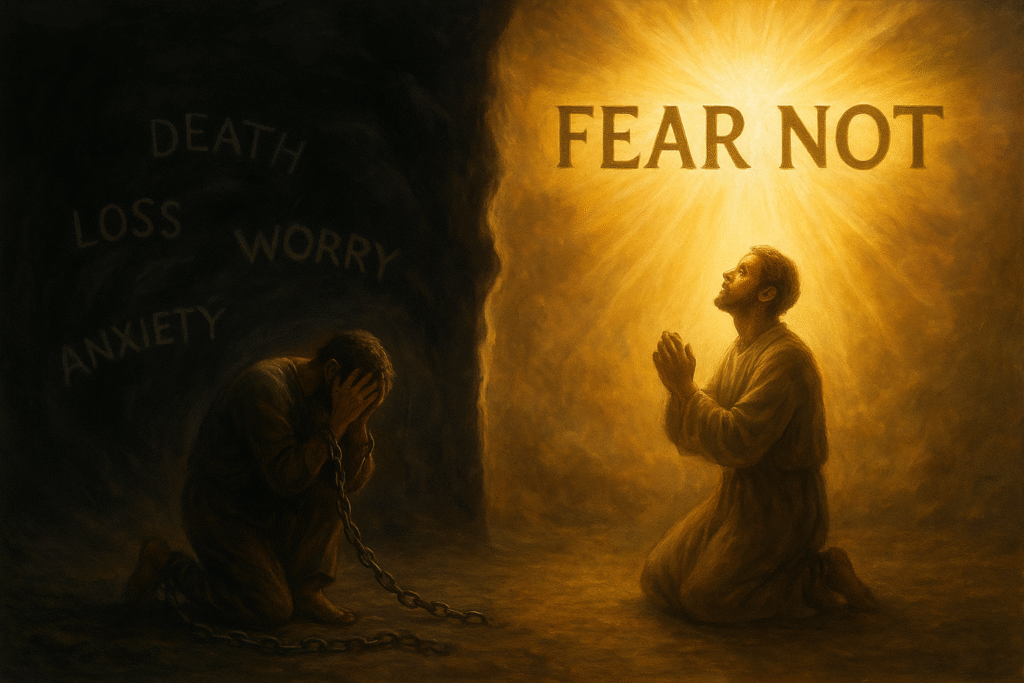
    This is the kind of fear rooted in the flesh—fear of death, loss, people, poverty, shame, or the unknown. These are ungodly fears because God refrains us from such forms of fear. It often springs from disobedience to God, lack of trust in God and a focus on our own circumstances or abilities.

    Understanding Ungodly Fear: From Death, Loss, and Shame in Christianity

    This is the enslaving, destructive fear we discussed in our first post (click here to read). It torments our minds, manipulates our decisions, and hinders us from fulfilling our God-given purpose.

    Bible verses of Ungodly Fear vs Godly Fear.

    Ungodly fear is the kind of fear the Scripture warns us against and encourages us to overcome. While godly fear is godly fear because the Bible instructed us to have this kind of fear.

    Biblical refrains from Ungodly fear.Biblical instruction to demonstrate godly fear.
    Isaiah 41:10
    “Fear thou not; for I am with thee: be not dismayed; for I am thy God: I will strengthen thee; yea, I will help thee; yea, I will uphold thee with the right hand of my righteousness
    Deuteronomy 13:4
    Ye shall walk after the Lord your God, and fear him, and keep his commandments, and obey his voice, and ye shall serve him, and cleave unto him.
    Joshua 1:9
    Have not I commanded thee? Be strong and of a good courage; be not afraid, neither be thou dismayed: for the LORD thy God is with thee whithersoever thou goest.
    Deuteronomy 10:12
    And now, Israel, what doth the Lord thy God require of thee, but to fear the Lord thy God, to walk in all his ways, and to love him, and to serve the Lord thy God with all thy heart and with all thy soul.
    Deuteronomy 31:6
    Be strong and of a good courage, fear not, nor be afraid of them: for the LORD thy God, he it is that doth go with thee; he will not fail thee, nor forsake thee.
    Deuteronomy 31:12
    Gather the people together, men and women, and children, and thy stranger that is within thy gates, that they may hear, and that they may learn, and fear the Lord your God, and observe to do all the words of this law.
    Deuteronomy 20:1
    When thou goest out to battle against thine enemies, and seest horses, and chariots, and a people more than thou, be not afraid of them: for the LORD thy God is with thee, which brought thee up out of the land of Egypt.
    1 Samuel 12:24
    Only fear the Lord, and serve him in truth with all your heart: for consider how great things he hath done for you.
    Exodus 14:13
    And Moses said unto the people, Fear ye not, stand still, and see the salvation of the LORD, which he will shew to you to day: for the Egyptians whom ye have seen to day, ye shall see them again no more for ever.
    Joshua 24:14
    Now therefore fear the Lord, and serve him in sincerity and in truth: and put away the gods which your fathers served on the other side of the flood, and in Egypt; and serve ye the Lord.
    Numbers 14:9
    Only rebel not ye against the Lord, neither fear ye the people of the land; for they are bread for us: their defence is departed from them, and the Lord is with us: fear them not.
    1 Peter 2:17
    17 Honour all men. Love the brotherhood. Fear God. Honour the king.
    Psalm 23:4
    Yea, though I walk through the valley of the shadow of death, I will fear no evil: for thou art with me; thy rod and thy staff they comfort me.
    2 Kings 17:36
    But the Lord, who brought you up out of the land of Egypt with great power and a stretched-out arm, him shall ye fear, and him shall ye worship, and to him shall ye do sacrifice.
    Psalm 27:1
    1 The Lord is my light and my salvation; whom shall I fear? the Lord is the strength of my life; of whom shall I be afraid?
    Job 28:28
    28 And unto man he said, Behold, the fear of the Lord, that is wisdom; and to depart from evil is understanding.
    Psalm 34:4
    I sought the Lord, and he heard me, and delivered me from all my fears.
    Psalm 2:11
    Serve the Lord with fear and rejoice with trembling.
    Psalm 46:1-2
    God is our refuge and strength, a very present help in trouble. Therefore, will not we fear, though the earth be removed, and though the mountains be carried into the midst of the sea.
    Psalm 34:9
    O fear the Lord, ye his saints: for there is no want to them that fear him.
    Psalm 91:5
    Thou shalt not be afraid for the terror by night; nor for the arrow that flies by day.
    Psalm 111:10
    10 The fear of the Lord is the beginning of wisdom: a good understanding has all they that do his commandments: his praise endures for ever.
    Isaiah 35:4
    4 Say to them that are of a fearful heart, Be strong, fear not: behold, your God will come with vengeance, even God with a recompence; he will come and save you.
    Proverb 1:7
    The fear of the Lord is the beginning of knowledge: but fools despise wisdom and instruction.
    Isaiah 43:1
    But now thus saith the Lord that created thee, O Jacob, and he that formed thee, O Israel, Fear not: for I have redeemed thee, I have called thee by thy name; thou art mine.
    Proverb 3:7
    Be not wise in thine own eyes: fear the Lord and depart from evil.
    Isaiah 54:4
    4 Fear not; for thou shalt not be ashamed: neither be thou confounded; for thou shalt not be put to shame: for thou shalt forget the shame of thy youth, and shalt not remember the reproach of thy widowhood anymore.
    Proverb 8:13
    The fear of the Lord is to hate evil: pride, and arrogancy, and the evil way, and the froward mouth, do I hate.
    Jeremiah 1:8
    8 Be not afraid of their faces: for I am with thee to deliver thee, saith the Lord.
    Proverb 9:10
    10 The fear of the Lord is the beginning of wisdom: and the knowledge of the holy is understanding.
    Matthew 10:28
    28 And fear not them which kill the body, but are not able to kill the soul: but rather fear him which is able to destroy both soul and body in hell.
    Proverb 14:27
    The fear of the Lord is a fountain of life, to depart from the snares of death.
    Matthew 10:31
    Fear ye not therefore, ye are of more value than many sparrows.
    Ecclesiastes 12:13
    13 Let us hear the conclusion of the whole matter: Fear God, and keep his commandments: for this is the whole duty of man.
    1 Peter 3:14
    But and if ye suffer for righteousness’ sake, happy are ye: and be not afraid of their terror, neither be troubled.
    Isaiah 8:13
    13 Sanctify the Lord of hosts himself; and let him be your fear, and let him be your dread.
    1 John 4:18
    18 There is no fear in love; but perfect love casts out fear: because fear hath torment. He that fear is not made perfect in love.
    Luke 12:5
    But I will forewarn you whom ye shall fear: Fear him, which after he hath killed hath power to cast into hell; yea, I say unto you, Fear him.
    Luke 2:10
    And the angel said unto them, Fear not: for, behold, I bring you good tidings of great joy, which shall be to all people.
    Acts 9:31
    Then had the churches rest throughout all Judaea and Galilee and Samaria, and were edified; and walking in the fear of the Lord, and in the comfort of the Holy Ghost, were multiplied.
    John 14:27
    Peace I leave with you, my peace I give unto you: not as the world giveth, give I unto you. Let not your heart be troubled, neither let it be afraid.
    Roman 10:20
    20 But Esaias is very bold, and saith, I was found of them that sought me not; I was made manifest unto them that asked not after me.
    Roman 8:15
    For ye have not received the spirit of bondage again to fear; but ye have received the Spirit of adoption, whereby we cry, Abba, Father.
    2 Corinthians 7:1
    1 Having therefore these promises, dearly beloved, let us cleanse ourselves from all filthiness of the flesh and spirit, perfecting holiness in the fear of God.
    2 Timothy 1:7
    For God hath not given us the spirit of fear; but of power, and of love, and of a sound mind.
    Ephesians 5:21
    Submitting yourselves one to another in the fear of God.
    Hebrews 13:6
    So that we may boldly say, The Lord is my helper, and I will not fear what man shall do unto me.
    Philippians 2:12
    Wherefore, my beloved, as ye have always obeyed, not as in my presence only, but now much more in my absence, work out your own salvation with fear and trembling.

    Overcoming the Spirit of Fear: 2 Timothy 1:7 Meaning

    the scripture say, “For God has not given us the spirit of fear, but of power, and of love, and of a sound mind.”—2 Timothy 1:7.

    Conquering Tormenting Fear Through Power, Love, and Sound Mind.

    If God has not given us the spirit of fear, then it cannot be from Him. It is a spiritual force that opposes God’s will for our lives, an instrument in the hand of the devil used to intimidate people and prevent believers from exercising God’s gifts of power, love, and a sound mind.

    The purpose of this blog series is to help you renew your heart and overcome this kind of tormenting fear.

    If you haven’t read them, be sure to catch up on the first two posts in this series:

    [My Battle with Fear: Finding Boldness in the Face of the Unknown: check it out here]

    [What is Fear? Understanding Its Spiritual Roots: click here to read]

    In our next post, we will tackle a crucial question: If God has not given us the spirit of fear, then why do so many Christians still struggle with it?


  • Escaping the Trap of Insatiable Need and Finding Your True Rest in Contentment.

    A Warning Against the Endless Pursuit of Needs and the Divine Path to Contentment

    If you are honest with yourself, you must acknowledge a foundational truth of the human condition: Your needs and desires are endless. When one need is finally met, you find that another immediately arises, pushing you back into the cycle of striving. I want to guide you today in understanding this inherent human trap and show you the only escape—the pathway to true spiritual contentment.

    The Futility of the Insatiable Human Appetite

    You must recognize that your human needs are fundamentally insatiable. I see in the wisdom of Scripture that “All things are full of labour; man cannot utter it: the eye is not satisfied with seeing, nor the ear filled with hearing”. Human’s labor is often focused on satisfying these endless cravings, yet satisfaction remains temporary unless it is rooted in spiritual contentment. Just as death and destruction are never full, “so the eyes of man are never satisfied”. You can never fully arrive at a point of lasting satisfaction if you seek it outside of God.

    Look at the pursuit of money; you are warned that “Whoever loves money never has enough; whoever loves wealth is never satisfied with their income. This too is meaningless”. Your desire for more never ends; only contentment in God brings rest. You must grasp that the more you get, the more you will crave. Earthly cravings multiply, and the human desire, like a fire, never says “Enough”.

    Your human effort alone, no matter how great, never fully quenches desire. The Bible states clearly that “All the labour of man is for his mouth, and yet the appetite is not filled”. Your work is often fueled by need, not by peace. If your labor is without God’s blessing, you will find yourself eating but never having enough, and drinking but never having your fill, leading only to emptiness and dissatisfaction.

    You may seek to satisfy all your desires, but the more you get, the more you discover new things to still have. “He who loves silver will not be satisfied with silver; nor he who loves abundance, with increase”. You must realize that pursuing satisfaction through possessions is futile because your human appetite always grows. Furthermore, needs often multiply faster than your ability to meet them. When goods increase, those who eat them increase, and your only gain as the owner is simply to see them with your eyes. This expansion of demands with possessions reminds you that your desire is like a bottomless pit or a fire that continually consumes. You must remember the profound instruction that “One’s life does not consist in the abundance of his possessions”.

    The Bondage of Striving and the Call to Rest

    You must realize that the pursuit of needs, though natural means without god-based contentment and trust in God and His words will lead to bondage to needs. Those who want to get rich fall into temptation and a trap and into many foolish and harmful desires. This unchecked pursuit of material satisfaction destroys your peace and relationships.

    The search for needs without rest in God leads to endless striving. “It is useless for you to work so hard from early morning until late at night, anxiously working for food to eat—for God gives rest to his loved ones”. You must know that anxiety-driven labor without trust in God’s provision produces exhaustion, and lack of mental peace.

    The LORD Jesus Christ directly invites you (every other person): “Come to me, all you who are weary and burdened, and I will give you rest”. Supernaturally, the human heart finds rest only in the Creator’s sufficiency. Truly, your soul finds rest only in God; all pursuits outside Him leave emptiness.

    Consider the dynamics of wealth and poverty: both the poor who fear lack, and the rich who fear loss, are slaves to need. If your heart depends on possessions, both poverty and wealth can bring unrest. The sleep of a laborer is sweet, but “as for the rich, their abundance permits them no sleep”. Whether you are rich or poor, peace belongs only to those who trust in God, not in wealth. If you trust in your riches, you will fall; the wealth of the rich is imagined as a fortified city, a wall too high to scale, but this false safety net will fail when life’s true needs are tested. But only those whose lives are founded in doing the words of Christ will not be overcome by the storms of life (Matthew 7:24-27).

    There is no end to what you call “enough” until you find satisfaction in God. I urge you to echo the Psalmist’s confession: “Whom have I in heaven but thee? and there is none upon earth that I desire beside thee. My flesh and my heart faileth: but God is the strength of my heart, and my portion for ever”. Only Jesus can fulfill your soul’s deepest hunger.

    The Wisdom of Spiritual Contentment

    The cure for this endless, restless need is contentment. The wisdom of Scripture declares: “But godliness with contentment is great gain”. True satisfaction is not the absence of needs but the peace that comes from contentment. This contentment is not automatic; it is learned: “I have learned to be content whatever the circumstances”. Contentment is learned through trust, not through having all needs and desires met.

    You are called to “Be content with what you have, because God has said, ‘Never will I leave you; never will I forsake you’”. The heart that finds rest in God stops chasing satisfaction elsewhere.

    Contentment is the quiet faith that believes, “God will take care of me”. The contented soul rests in divine assurance and never fears tomorrow’s hunger. To be content is to confess that God’s portion is sufficient.

    Contentment brings with it a greater wealth than any bank account can hold: “Better a little with the fear of the LORD than great wealth with turmoil”. Peace is wealth that no currency can buy. Your true wealth is freedom from anxiety. The peaceful man has no less need than others, only less worry. You must realize that a quiet heart is richer than a full bank account.

    Contentment is not the absence of need, but the presence of trust. Trust transforms lack into sufficiency. Contentment also honors God’s timing and wisdom, acknowledging that “God’s time and plan are perfect”. You are asked to “Be content with what you have”.

    You must understand that fear ends where contentment begins. God has not given you “a spirit of fear, but of power and love and self-discipline”. You “can do all this through Him who gives you strength”. Faith-driven contentment silences fear’s voice forever.

    Furthermore, gratitude turns little into enough; while greed turns abundance into lack. You must “Give thanks in all circumstances”. A thankful heart multiplies blessings, whereas a greedy one loses sight of them.

    I encourage you to embrace your needs, for they are meant to expose your dependence on God. God sometimes humbles you and lets you hunger, “to teach you that people do not live by bread alone but by every word that comes from the mouth of the LORD”. Your needs remind you that you are not self-sufficient. “Apart from Me (God) you can do nothing”. Your human effort alone is inadequate; divine sufficiency is everything  and divine provisions are highly needed for human survival. Thus, you shall not live alone by food (human means) alone; but by every words of God.

    By fixing your gaze on godliness with contentment, you step off the treadmill of endless desire and enter the divine rest that Jesus promises. When the Shepherd leads, the sheep rest. Resting in God’s Word produces inward peace. Let your content soul be qualified for much, knowing that contentment in little qualifies you for much.

  • Understanding the Meaning of Fear through the Bible and Its Spiritual Origin.

    What is fear? Spiritual roots of fear in the Bible – light overcoming darkness

    Introduction.

    In our last post, we explored how fear can feel like a personal and physical enemy—a force that paralyzes and keeps us from moving forward. But to truly conquer fear, we must understand its nature, purpose, and origin, especially from a biblical perspective.

    Fear is more than an emotion. It is deeply spiritual, rooted in the fallen human condition, and has shaped humanity since the beginning of time.


    The Origin of Fear in the Bible

    Adam and Eve hiding among trees in Eden with shadows of fear labeled “anxiety,” “worry,” “guilt,” and “insecurity,” while God’s light shines in the background.
    A symbolic Christian artwork showing Adam and Eve hiding from God after the Fall, surrounded by shadows of fear and insecurity.

    Carnal ungodly fear was never part of God’s original make up for human being. Fear first appeared after the fall of man in the Garden of Eden—and it emanated from disobedience to (sin against) God.

    In Genesis 3:10, Adam confessed:
    “I heard your voice in the garden, and I was afraid, because I was naked; and I hid myself.”

    Before Adam and Eve sin, they walked with God in perfect companionship of love and there was no any form of fear—because there is no fear. But disobedience opened the door to separation from God—and fear entered human nature.

    Imagine a child who breaks his father’s command not to touch the television. When the screen shatters, he dreads his father’s return—not only because of the broken rule but also because of the damage done. Instead of longing for his father’s presence, he hides in fear.

    This is what happened to Adam and Eve. Disobedience produced shame, guilt, and fear—not because God had changed, but because they had. Fear became their new reality.


    The Destructive Nature of Fear

    Fear is both physical and spiritual. Scientifically, fear triggers chemical reactions in the brain—causing a racing heart, rapid breathing, and tense muscles. Spiritually, fear arises when we perceive danger, threats, judgment, loss, or the unknown.

    Fear is not always about external danger. It often comes from within—worrying about failure, rejection, shame, or even the pressures of success.

    It manifests as agitation, alarm, or distress. Whether the threat is real (like a wild beast) or imagined (like the thought of failure), fear feels equally tormenting. This shows that fear is not just a natural emotion—it is a spiritual condition that enslaves the mind.


    Fear Passed Down Through Humanity

    From that moment, fear became part of the natural human state. It has worn many garments—anxiety, panic, guilt, insecurity—and has plagued every generation.

    Just as Adam and Eve hid from God, people today still hide. We fear exposure, judgment, failure, and rejection. Sin and disobedient create distance from God—creating dreadful outcomes. Thus, Fear thrives wherever there is disobedience or sin against God and its consequential distance or separation from God. The farther we drifts from God through sin and it’s terrifying consequences, the more fear dominates.


    Freedom From the Spirit of Fear

    The good news is that fear does not have to control your life. The Bible makes it clear in 2 Timothy 1:7:
    “For God has not given us the spirit of fear, but of power and of love and of a sound mind.”

    Fear is not God’s gift—it is a consequence of separation from Him. Through Christ, you can be free from tormenting fear and live in the peace, power, and confidence that come from His Spirit.


    Moving Forward

    Fear is real, but it is not final. Understanding its origin helps us recognize that it is not part of God’s plan for us. Fear thrives on separation from God, but faith thrives on intimacy with Him.

    In our next post, we will explore the two types of fear: the destructive, tormenting fear that enslaves us, and the healthy, reverential fear of the Lord that brings wisdom and life.

    👉 Missed the beginning? Read my personal testimony in the first post of this series: [My Battle with Fear: Finding Boldness in the Face of the Unknown]. (click here to read).

    👉 Reflection Question: Have you ever felt paralyzed by fear—whether real or imagined? Share your thoughts in the comments below. Your story may encourage someone else.

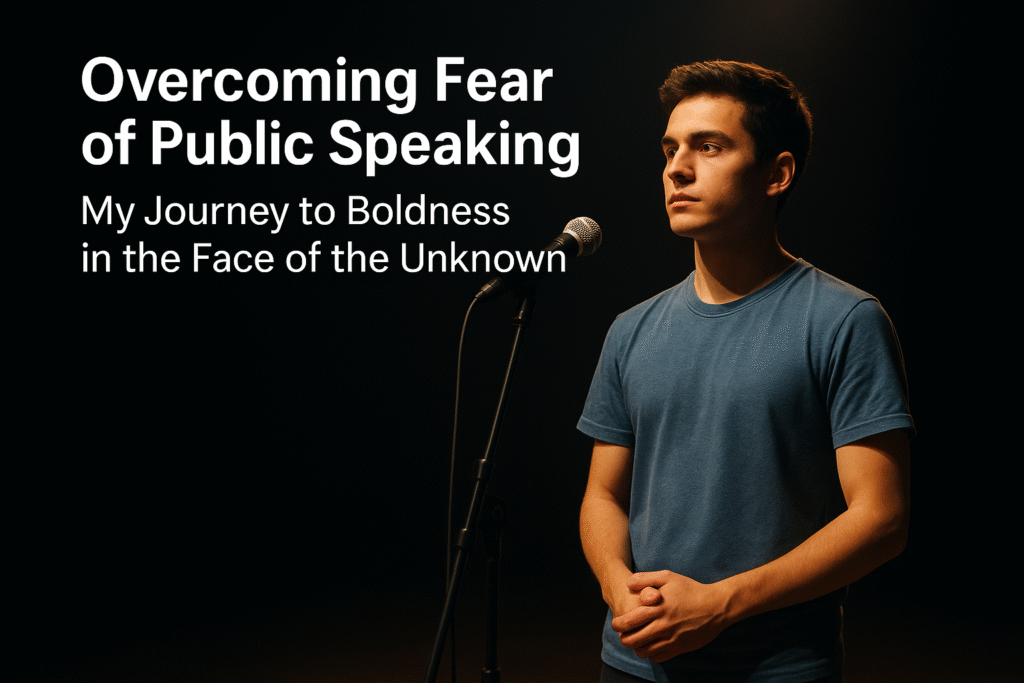
  • Overcoming Fear of Public Speaking.

    My Journey to Boldness in the Face of the Unknown.

    Nervous student preparing for a debate, feeling anxious before speaking

    Fear — it’s more than just a word. It’s an invisible chain that can wrap around your mind, tightening its hold until it feels impossible to breathe. For me, fear wasn’t an abstract idea; it became a tangible presence, gripping me with a force that was both debilitating and destructive.

    I remember one moment vividly — the day it completely froze me. My heart pounded like a frantic drum solo inside my chest. Looking back, the fear that once seemed so powerful now feels almost unworthy of the control it had over me.


    The Day Fear Took Hold of Me

    The challenge came without warning. My classmates, with unshakable enthusiasm, nominated me to represent our class in a debate against the senior students.

    “Why me?” I kept asking myself. Perhaps they saw a courage I didn’t feel — a boldness that was just a façade. What they didn’t know was the battle raging within. I was terrified.

    In the days that followed, anxiety became my constant shadow. Every thought of standing before a crowd sent waves of unrest through me. Yet, saying “no” felt impossible. My “yes” felt like a binding contract with myself.


    The Day of the Debate

    The debate day loomed like a storm cloud. I stood with two other representatives, but my heart wasn’t just beating — it was rebelling. My hands were clammy, my posture hesitant, my courage slipping away.

    Then came an unexpected moment of grace. A corps member serving in our school noticed my distress. Without words, he made a calming motion with his hands, silently telling me, Relax. Be still.

    It was exactly what my panicked heart needed.


    Choosing Boldness Over Fear

    I took a shaky breath, stepped forward, and made a decision — a deliberate choice to cast away the fear threatening to swallow me whole. My knees trembled, but my spirit stood tall.

    Then I spoke. The words didn’t flow flawlessly, but they flowed — and they carried a courage that surprised even me. I conquered.

    When I finished, the applause wasn’t just noise. It was the sound of victory over fear, louder and stronger than the anxieties that had tried to hold me captive.


    What I Learned About Fear and Boldness

    That day, I discovered something life-changing:

    Boldness is not the absence of fear; it is the decision to rise above it.

    This wasn’t the end of my journey with fear — it was the beginning. It led me to explore what Scripture says about fear, courage, and faith.


    Your Turn

    Have you ever faced fear that nearly paralyzed you?
    Share your story in the comments — someone may need your courage today.

    📖 Next Post: We’ll dive into the spiritual roots of fear and how to overcome them with the truth of God’s Word.